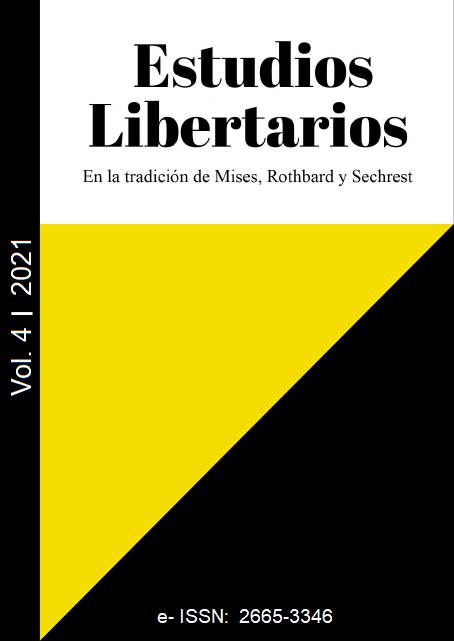
The journal “Estudios Libertarios” has established itself as a forum for disseminating and debating ideas about liberty within academia. For the past four years, it has sought to promote rigorous research that contributes to the spread of libertarian thought. In this edition, reflections on Venezuela once again take center stage, at a particularly critical moment for that country. Specifically, the institutional and economic roots of its crisis are examined, as well as the lessons this experience offers for the defense of a free society.
Furthermore, this volume invites a return to the foundations of libertarianism. In keeping with the journal’s intellectual orientation, several articles delve into the perspective of thin libertarianism, advocating an approach centered on the unrestricted defense of individual liberty, property rights, and the non-aggression principle, while avoiding the incorporation of agendas foreign to these essential principles.
The Austrian School of Economics continues to occupy a central place in our pages. Readers will find contributions on monetary theory, tax policy, central planning, and other topics in political economy that offer analytical tools for understanding contemporary challenges from the perspective of this school of economic thought.
Finally, we are pleased to present an exclusive interview conducted by our editor-in-chief with the Austrian economist Karl Socher. In it, Professor Socher shares his reflections on economics, the intellectual tradition of the Austrian School, and some of the main challenges facing free societies in the 21st century.
We hope that this new volume will continue to stimulate academic debate and strengthen interest in the ideas of liberty among researchers, students, and readers worldwide.
Length: 163 pages.
Complete Volume
Presentation
Articles

Venezuela: The Downfall of Promise
Christian Hanson, Walter E. Block & Rafael Acevedo
The Venezuelan crisis did not begin with Hugo Chávez, but with the interventionist policies applied since 1958, which progressively weakened the free market.

A Critical Evaluation of Hoppe´s “Getting Libertarianism Right”
Walter E. Block
Hoppe (2018) rejects left-libertarianism and proposes placing libertarianism on the right. This article disagrees with both positions and defends a more nuanced or balanced libertarianism, independent of the left-right axis.

Why Modern Monetary Theory (MMT) is Wrong on Debt and Inflation: An Austrian…
Robert P. Murphy, Myles Owens & Walter E. Block
The article criticizes Modern Monetary Theory (MMT) from the perspective of the Austrian School, arguing that it promotes irresponsible expansion of public spending and monetary issuance by minimizing the risks of deficits and inflation.

The Invisible Budget Constraint
Márton Kónya
This article compares the explanations of socialist economies offered by Ludwig von Mises and János Kornai. The former provides a more robust explanation of how central planning works than Kornai’s theory of soft budget constraints.

Voracidad fiscal y moralidad tributaria
Daniel Toro Restrepo
This essay critically analyzes Martín Litwak’s book on tax havens and tax competition. It argues that tax havens limit the fiscal voracity of states, encourage investment, and challenge the economic and ethical foundations of taxation.
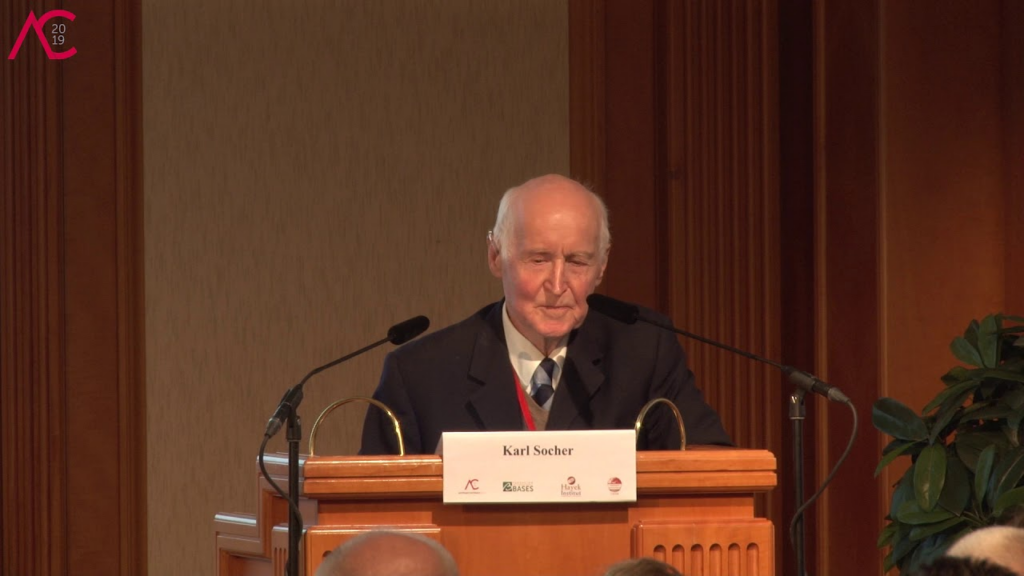
The Legacy of Karl Socher: Applications and Perspectives of the Austrian School…
Karl Socher & David Chávez Salazar
Interview with Austrian economist Karl Socher, highlighting his career, contributions to the Austrian School and his perspective on the current challenges of Austrian economic thought and contemporary economic policy.
Book reviews
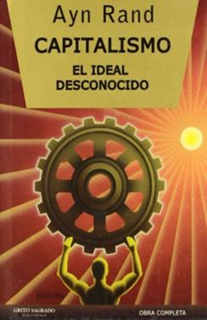
Review 1: “Capitalismo: El ideal desconocido”
José Roberto Briones
This review examines Capitalism: The Unknown Ideal, highlighting its philosophical defense of capitalism as a system based on individual rights, private property, and the free market. It also analyzes its critique of altruism, state intervention, and other ideas contrary to economic freedom.
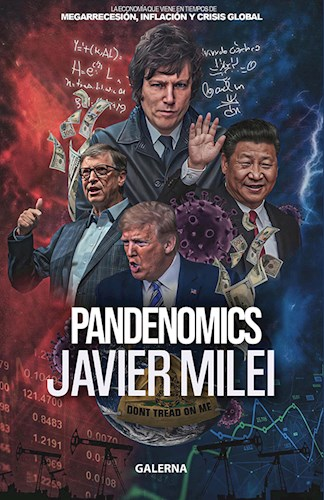
Review 2: “Pandenomics: La economía que viene en tiempos de megarrecesión…”
Pedro Lárez Silva
This review highlights Pandenomics as a work that integrates economics and epidemiology to explain the causes and consequences of the COVID-19 pandemic. It values its ability to distinguish the effects of the pandemic itself from those resulting from government policies and offers tools for understanding future crises.
Translations
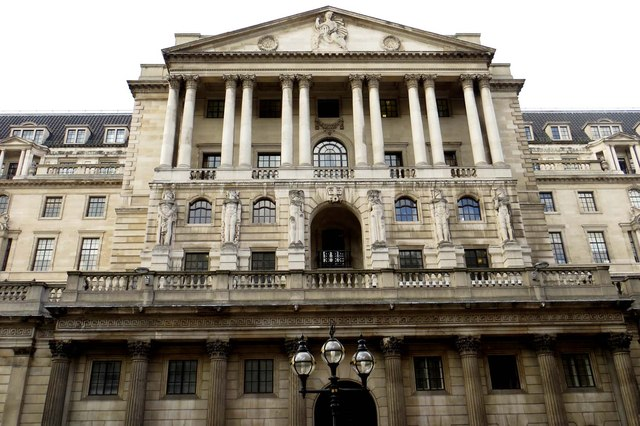
Translation 1: «La tesis de White sobre la Banca Libre: Un caso de identidad…»
Author: Larry J. Sechrest
Translator: David Chávez Salazar
Sechrest challenges Lawrence H. White’s thesis that Scotland had a true free banking system (1695–1845), arguing that there were privileged banks, limited convertibility of banknotes, and a heavy reliance on the Bank of England as lender of last resort.
News and Reflections

Reflection 1: El suicidio de Chile
Claudio Lapostol Vargas
The election of Gabriel Boric represents a serious setback for Chile, attributing it to the historical influence of the Communist Party, the social upheaval of 2019, and a narrative of inequality that, according to the author, overshadowed the country’s economic progress.
News 1: #RestartVienna at an Unforgettable 10th Austrian Economics…
Victoria Schmid
The 10th Austrian Economics Conference (Vienna, 2021) commemorated the 150th anniversary of Carl Menger’s work and brought together academics to discuss topics such as the Austrian School, bitcoin, the environment, capitalism, and monetary theory.
Instructions for authors
Cover back